Demystifying Learning AI: Rags to Riches Style!
The resources I followed day and night for about six months: one unbroken path from a little Python to training, post-training, and serving an LLM you understand from the weights up.
From Python and math to a trained GPT to do reasoning, serving at scale!
I got into AI/ML in high school, but was not very much into it like I am right now then. Still, that was a pivotal point in shaping the decision of going into AI/ML I took in the early days of 2023.
The below are the resources I followed, day and night for about 6 months rigorously, to attain what little I know today about this field, and would like to share it with you all too!
Who is it for? Someone who knows/writes a little Python and wants one unbroken path from the basics of machine learning to serving an LLM you understand from the weights up.
Covers: Basics of Machine Learning and Deep Learning through to the latest Generative AI topics, from training to evaluation.
Leaves out: Frontier-scale training runs, and reproducing research papers from scratch; this path gets you to the point where they are worth attempting.
Shelf (all resource links): papercase.dev/c/learning-ai-for-dummies
Start here
01 : CS50’s Introduction to Programming with Python (CS50P)
David J. Malan (Harvard CS50) · 2024
Why? Ten live lectures, each with a graded problem set, to teach you the basics of programming and Python (OOPs and functions is a must).
02 : Essence of Linear Algebra
Grant Sanderson (3Blue1Brown) · 2016
Why? Sixteen short videos on vectors, matrices, and eigenvectors: enough to read mathematical notations when reading through a ML algorithm and basic proofs/statements.
03 : Statistics Fundamentals
Josh Starmer (StatQuest) · 2020
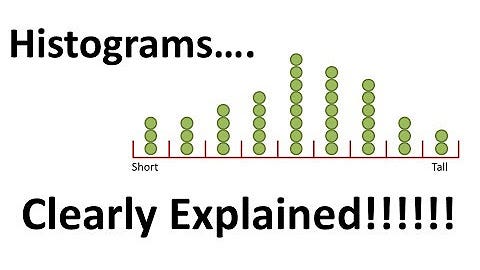
Why? Distributions, p-values, regression, and likelihood in short clear videos. Helps to understand the reason of the tests/eval results.
04 : Machine Learning Specialization
Andrew Ng (DeepLearning.AI / Stanford) · 2022
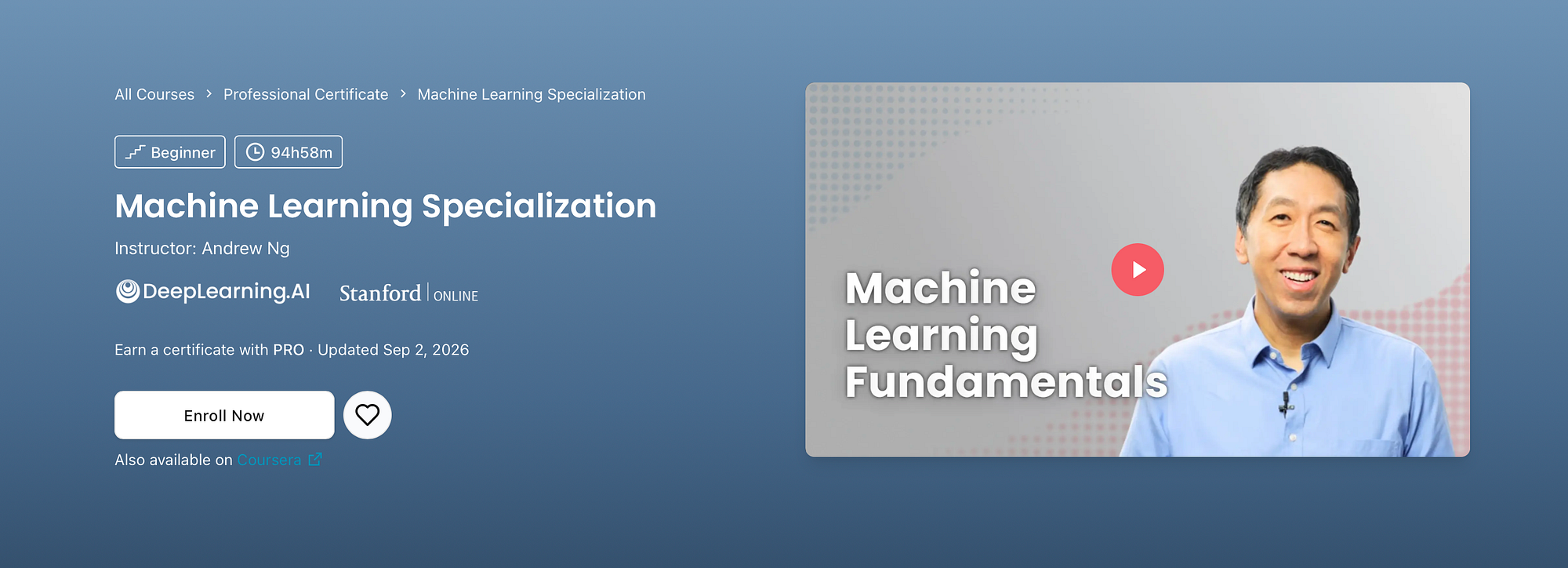
Why? Three courses from linear regression to recommender systems, with graded labs in Python. The path most people mean when they say they learned ML, and well I did the same!
05 : Deep Learning Specialization
Andrew Ng (DeepLearning.AI) · 2022
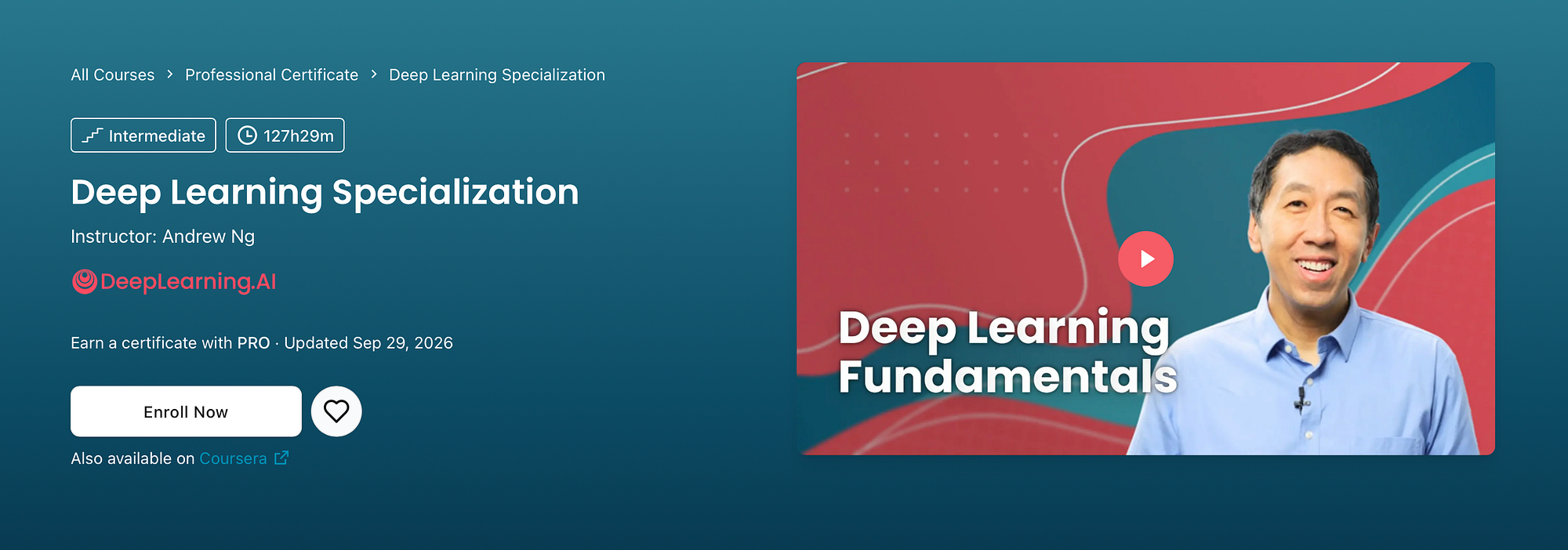
Why? Five courses from neural nets through CNNs, RNNs, and sequence models. Take it after the ML specialization; the labs assume that vocabulary.
06 : Cracking Deep Learning: 35 problems from scratch
TensorTonic · 2026
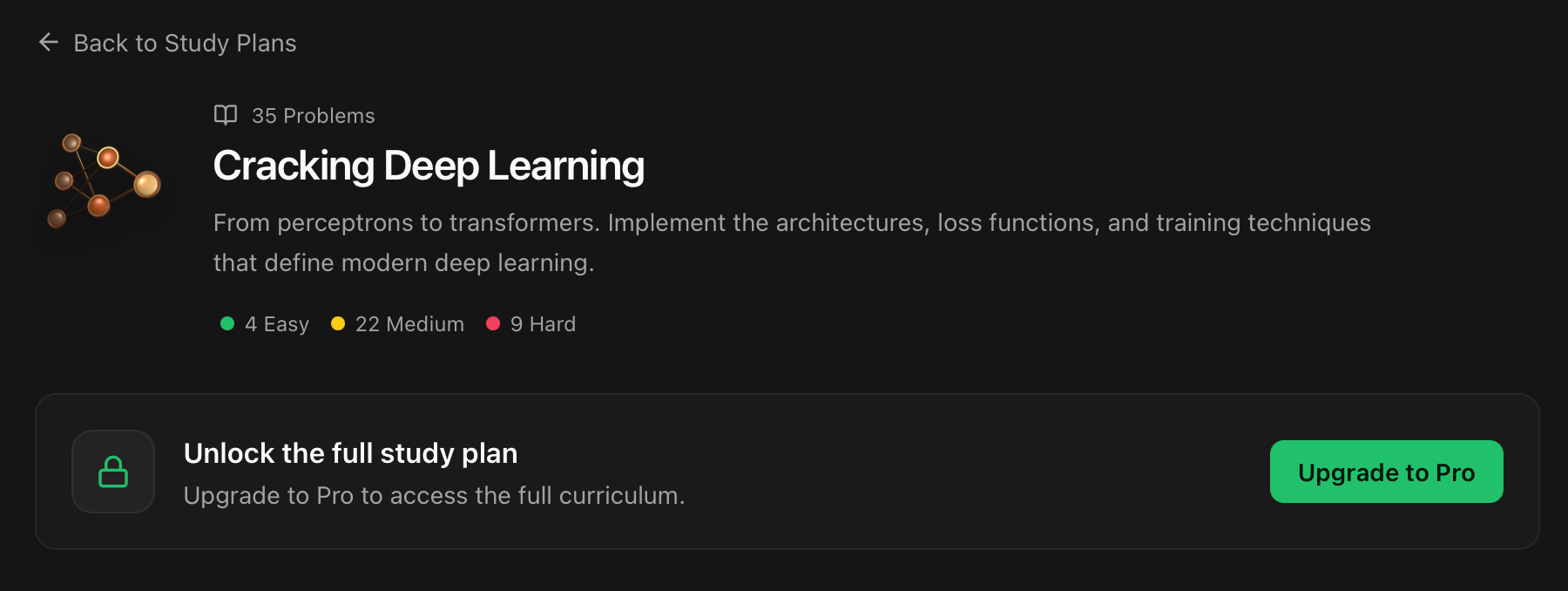
Why? Write a conv, an LSTM cell, and multi-head attention against real tests; helps you grasp the concepts better (could do Kaggle too!). Work through it beside the Machine/Deep Learning Specialization.
07 : Stanford CS336: Language Modeling from Scratch | Spring 2026
Percy Liang, Tatsunori Hashimoto · 2026
Why? The whole stack in one course: tokenizer, transformer, Triton kernels, distributed training, scaling laws, all the basics needed to get a grasp of how systems like ChatGPT was made and is currently served (to some extent at least the inference engine parts).
Optional
04.1 – 100 Days of Machine Learning
CampusX (Nitish Singh) · 2021
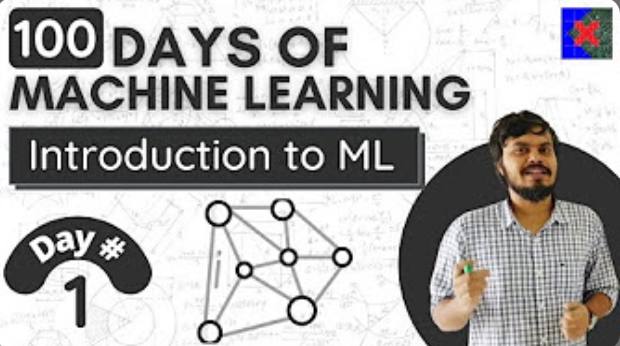
Why? 134 Hinglish lectures deriving each classical model before calling sklearn. A slower, spoken alternative if the ML specialization feels too compressed.
05.1 – 100 Days of Deep Learning
CampusX (Nitish Singh) · 2022
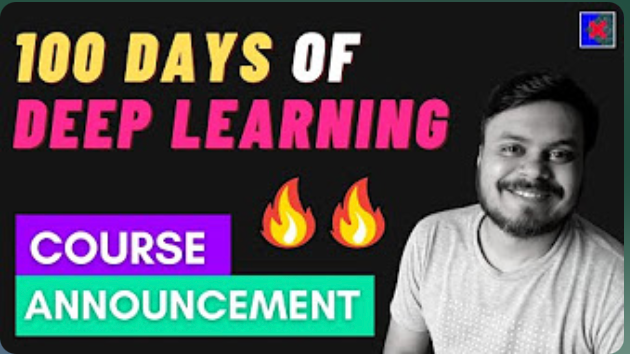
Why? 84 lectures from perceptron to transformers with backprop derived by hand. Optional if you want the same ground as the DL specialization in Hinglish.
Intermediate
08 : Build a Large Language Model (From Scratch)
Sebastian Raschka · 2024
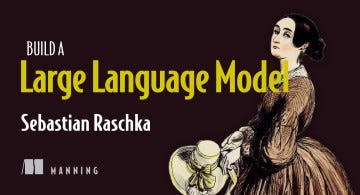
Why? A GPT-2-sized model on a laptop, every tensor printed. The slower companion to CS336 once you have the beginner stack.
09 : Reinforcement Learning from Human Feedback
Nathan Lambert · 2026
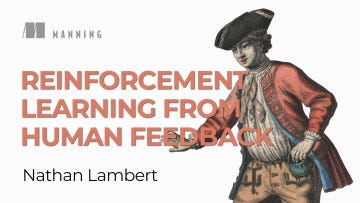
Why? Post-training end to end: preference data, reward models, RLHF, and the reasoning chapter on RLVR. The Manning path into how models learn to think.
10 : Inference Engineering
Philip Kiely (Baseten Books) · 2026
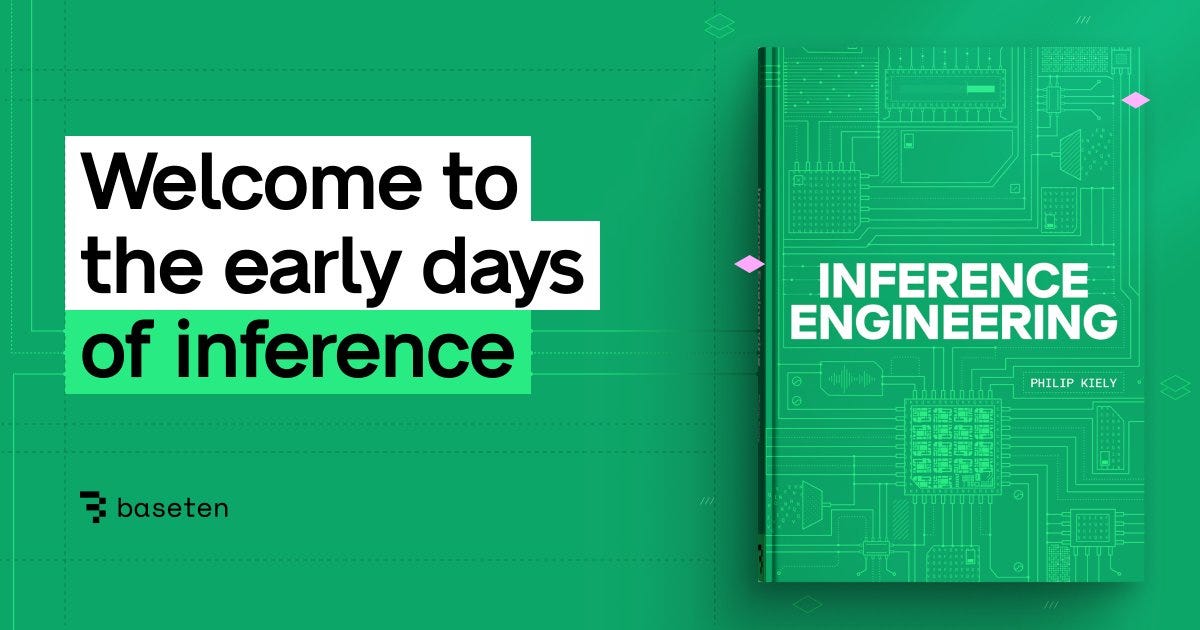
Why? A free 256-page book on running models in production: hardware, software, techniques, modalities, then a production chapter that puts them together.
Frequently asked questions
Who is this learning path for?
Someone who writes a little Python and wants one unbroken path from the basics of machine learning to serving an LLM they understand from the weights up.
What does it cover?
Basics of machine learning and deep learning through generative AI topics, from training to evaluation and production inference.
What does it leave out?
Frontier-scale training runs and reproducing research papers from scratch. This path gets you to the point where those are worth attempting.
Where is the living shelf of these resources?
On PaperCase at papercase.dev/c/learning-ai-for-dummies (the Shelf link in the post).